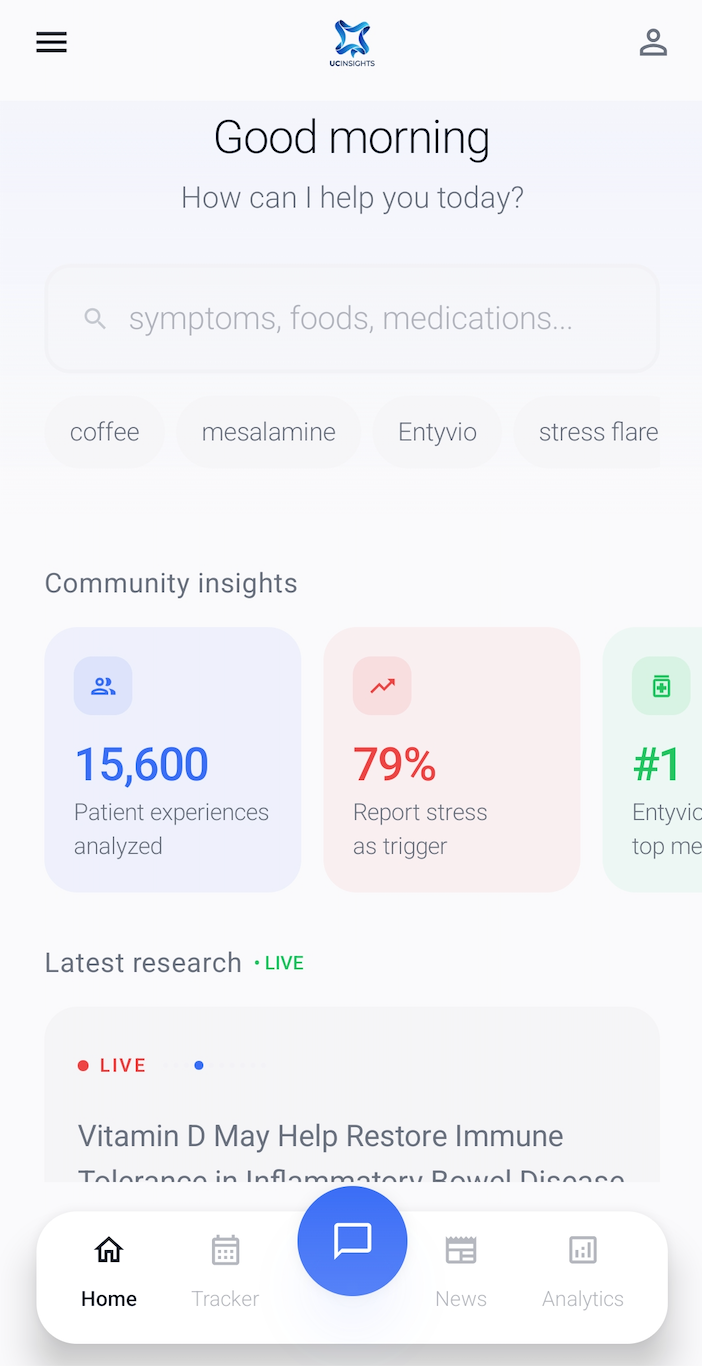
UCInsights synthesizes 15,600 real patient experiences and 20,000+ peer-reviewed PubMed publications using AI to deliver actionable insights on symptoms, medications, diet, and symptom patterns.
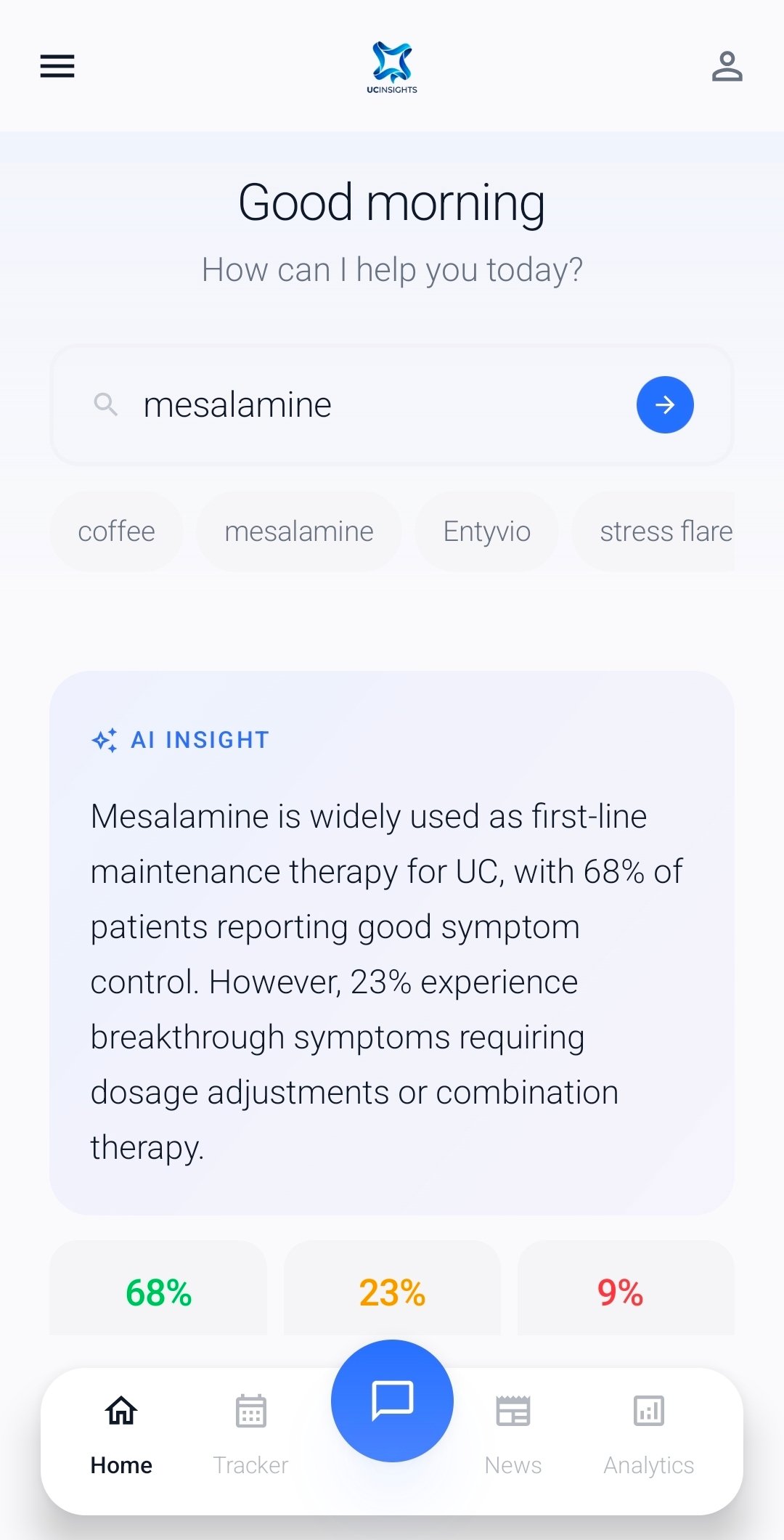
Search across 15,600 real patient experiences and 20,000+ PubMed research publications using natural language. Get AI-synthesized answers backed by both community insight and peer-reviewed science.
Claude AITrack 8 primary UC symptoms with prevalence data, monthly trends, correlation matrices, and patient-reported discussions.
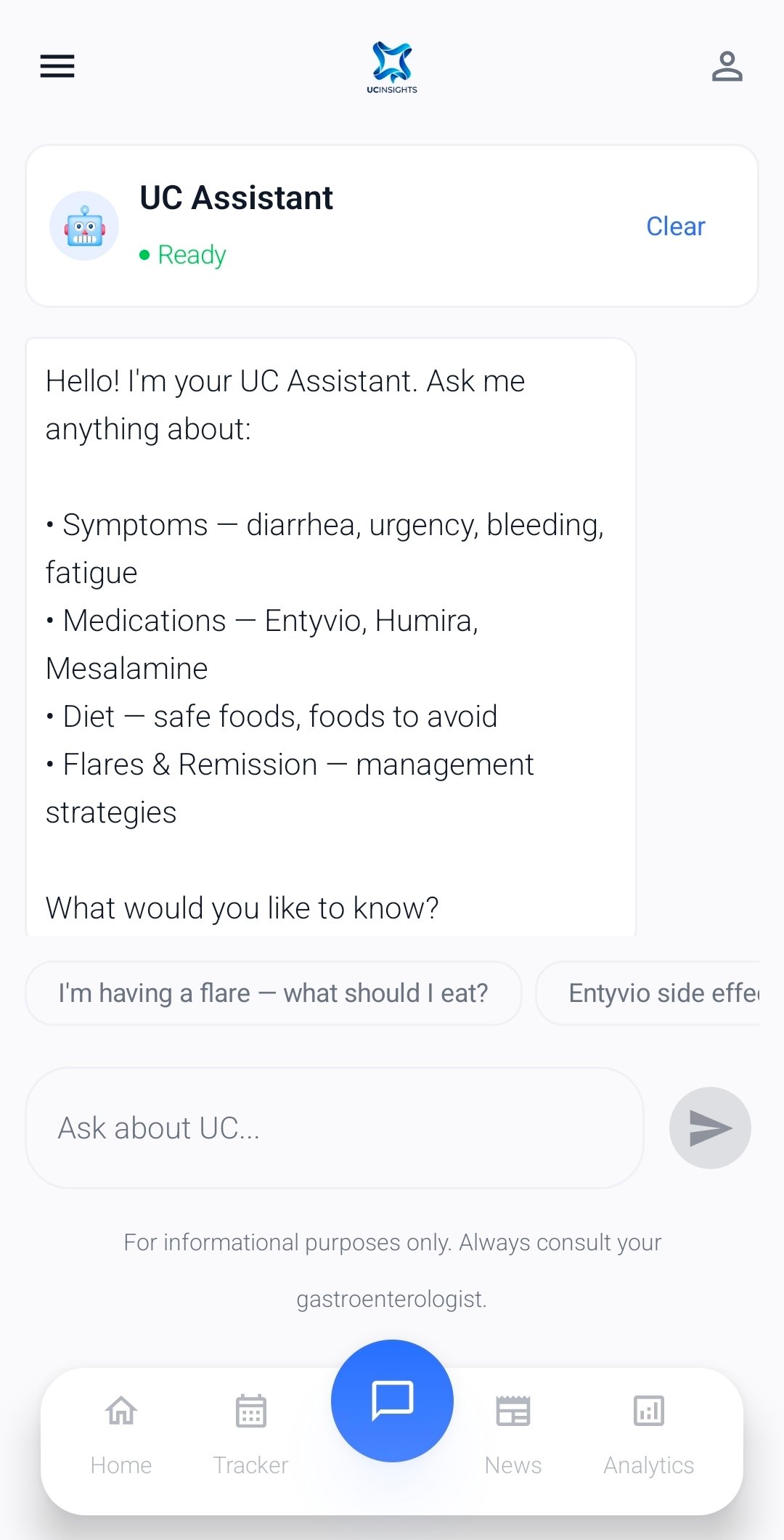
Real-Time DataBilingual (EN/TR) conversational AI trained on UC patient data. Explore summarized community insights on symptoms, diet, and medications.
BilingualPatient-scored food safety ratings across 22+ items. Categorized as Avoid, Safe, or Drinks with community sentiment percentages.
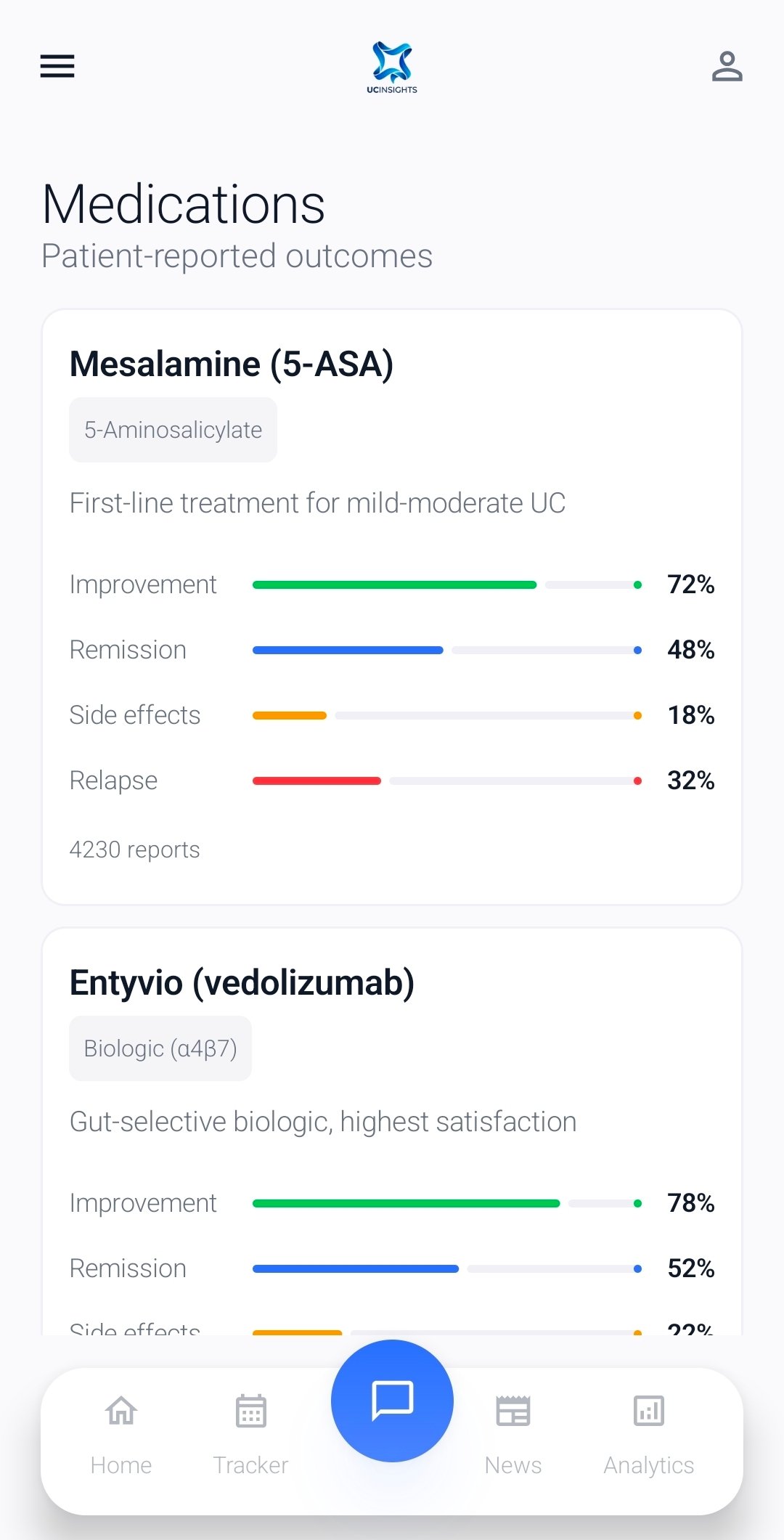
22+ Foods9 medications with patient-reported outcomes on reported remission trends, side effects, and community experience. From Mesalamine to Rinvoq.
9 Medications48-hour symptom pattern assessment using multi-factor analysis: stress, diet, symptoms, and trend data. Simplified Mayo Score (UCAI).
Pattern TrackingComprehensive daily logging: bowel movements, symptoms (1-5 severity), meals, water, sleep, medications, stress, and activity.
12 MetricsAI-detected co-occurrence patterns and 5×5 symptom correlation matrix. Identifies personal triggers from logged data.
AI DetectionReal-time UC research feed via Google News RSS. Auto-updating with push notifications for new clinical findings.
Live FeedTwo complementary sources power UCInsights: 15,600 real patient reports from Reddit r/UlcerativeColitis, IBD forums, and patient registries — plus 20,000+ peer-reviewed scientific papers, clinical studies, and physician research sourced exclusively from PubMed, covering every facet of Ulcerative Colitis from research institutions worldwide. All data anonymized and categorized by symptom, treatment, and outcome.
Claude AI performs sentiment analysis, co-occurrence detection, and statistical correlation across symptoms, foods, medications, and lifestyle factors. Confidence intervals calculated for each pattern.
Personal tracker data feeds into a multi-factor symptom pattern model incorporating stress, symptoms, diet, and trend data. Simplified Mayo Score computed daily for self-monitoring reference.